Observação
For an overview of Copilot cloud agent, see About GitHub Copilot cloud agent.
Introduction
You can ask Copilot to create a new pull request from:
- GitHub Issues, by assigning an issue to Copilot
- The agents tab or panel on GitHub
- The dashboard on GitHub
- Bate-Papo Copilot in Visual Studio Code, JetBrains IDEs, Eclipse and Visual Studio 2026
- Bate-Papo Copilot on GitHub.com
- The GitHub CLI
- On GitHub Mobile
- Your preferred IDE or agentic coding tool with Model Context Protocol (MCP) support
- The Raycast launcher
- The "New repository" form on GitHub
Copilot will start working on the task, raise a pull request, then request a review from you when it's finished working. For more information, see About GitHub Copilot cloud agent.
Assigning an issue to Copilot
You can ask Copilot to start working on an issue by assigning the issue to Copilot.
You can assign an issue to Copilot:
- On GitHub.com (see the next section)
- On GitHub Mobile
- Via the GitHub API (see later in this article)
- Using the Raycast launcher
- Using GitHub CLI (see
gh issue edit)
Assigning an issue to Copilot on GitHub.com
Observação
This feature is in versão prévia pública and subject to change.
-
Em GitHub, acesse a página principal do repositório.
-
No nome do seu repositório, clique em Issues.

-
Open the issue that you want to assign to Copilot.
-
In the right side menu, click Assignees.
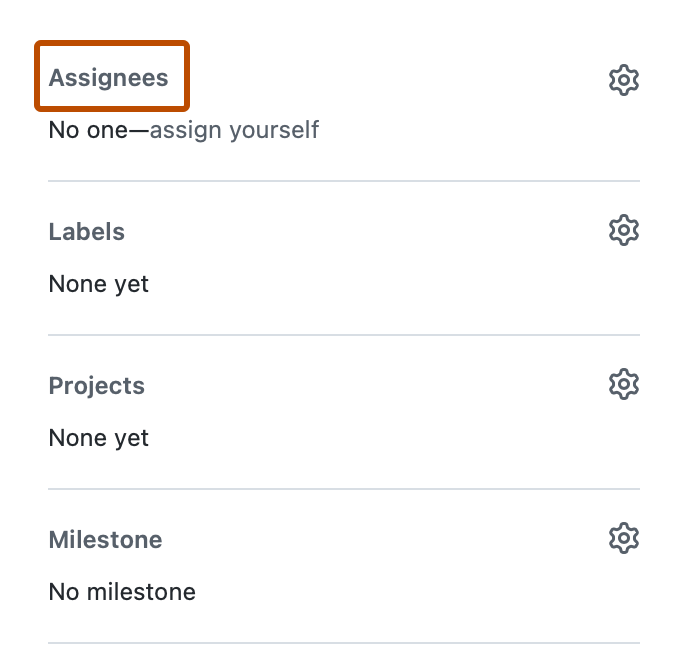
-
Click Copilot from assignees list.

Additional options are displayed.

-
In the Optional prompt field you can add specific guidance for Copilot. Add any context, constraints, or specific requirements that will help Copilot to understand and complete the task.
For example, you might include instructions about specific coding patterns or frameworks to use, testing requirements, code style preferences, files or directories that should or shouldn't be modified.
In addition to the details you supply here, Copilot will use any custom instructions that have been configured for the target repository. See Adicionando instruções personalizadas do repositório para GitHub Copilot.
-
You can use the dropdown menus in the dialog to change the repository that Copilot will work in and the branch that it will branch off from.
All repositories where you have at least read access will be displayed in the repository dropdown menu. However, you can only select a repository if you have write access to it, and if Copilot cloud agent is enabled for that repository.
If you select a repository in a different organization than the issue's source organization, or if you select a public repository when the issue is in a private repository, a warning will be displayed.
If you don't specify a repository, Copilot will work in the same repository as the issue. If you don't specify a branch, Copilot will work from the default branch of the selected repository.
Dica
When you assign an issue to Copilot, it gets sent the issue title, description, any comments that currently exist, and any additional instructions you provide. After assigning the issue, Copilot will not be aware of, and therefore won't react to, any further comments that are added to the issue. If you have more information, or changes to the original requirement, add this as a comment in the pull request that Copilot raises.
-
Opcionalmente, você pode clicar para abrir o menu suspenso do agente, se quiser atribuir um agente ou um agente personalizado com ferramentas e comportamento especializados. Você pode selecionar um existente agente personalizado do seu repositório, organização ou empresa. Você também pode clicar em Criar um agente para criar um novo perfil do agente em seu repositório e branch selecionados. Para saber mais, confira Creating custom agents for Copilot cloud agent.
Observação
Agentes de codificação de terceiros estão disponíveis nos planos GitHub Copilot Pro+ e Copilot Enterprise.
-
Optionally, if you are a Copilot Pro do GitHub or GitHub Copilot Pro+ user, you can use the dropdown menu to select the model that Copilot will use. For more information, see Changing the AI model for GitHub Copilot cloud agent.


You can also assign issues to Copilot from other places on GitHub.com:
- From the list of issues on a repository's Issues page.
- When viewing an issue in GitHub Projetos.
Assigning an issue to Copilot on GitHub Mobile
- In GitHub Mobile, navigate to the repository that contains the issue you want to assign to Copilot.
- Click Issues.
- Open the issue that you want to assign to Copilot.
- Tap the icon.
- Beside "Assignees", tap Edit.
- Beside "Copilot", click the plus sign.
- Click Done.
Assigning an issue to Copilot via the GitHub API
Observação
This feature is in versão prévia pública and subject to change.
You can assign issues to Copilot using either the GraphQL API or the REST API. Both APIs support an optional Agent Assignment input to customize the task:
| GraphQL parameter | REST parameter | Description |
|---|---|---|
targetRepositoryId | target_repo | The repository where Copilot will work |
baseRef | base_branch | The branch that Copilot will branch from |
customInstructions | custom_instructions | Additional instructions for Copilot |
customAgent | custom_agent | A agente personalizado to use for the task |
model | model | The model for Copilot to use |
Using the GraphQL API
Observação
You must include the GraphQL-Features header with the values issues_copilot_assignment_api_support and coding_agent_model_selection.
You can use the following GraphQL mutations to assign issues to Copilot:
Creating and assigning a new issue
-
Make sure you're authenticating with the API using a user token, for example a personal access token or a GitHub App user-to-server token.
Observação
If using a fine-grained personal access token, it needs the following permissions to assign Copilot to an issue:
- Read access to metadata
- Read and write access to actions, contents, issues and pull requests
If using a personal access token (classic), it needs the
reposcope to assign Copilot to an issue. -
Verify that Copilot cloud agent is enabled in the repository by checking if the repository's
suggestedActorsin the GraphQL API includes Copilot. Replaceocto-orgwith the repository owner, andocto-repowith the repository name.GraphQL query { repository(owner: "octo-org", name: "octo-repo") { suggestedActors(capabilities: [CAN_BE_ASSIGNED], first: 100) { nodes { login __typename ... on Bot { id } ... on User { id } } } } }query { repository(owner: "octo-org", name: "octo-repo") { suggestedActors(capabilities: [CAN_BE_ASSIGNED], first: 100) { nodes { login __typename ... on Bot { id } ... on User { id } } } } }If Copilot cloud agent is enabled for the user and in the repository, the first node returned from the query will have the
loginvaluecopilot-swe-agent. -
Make a note of the
idvalue of this login. -
Fetch the GraphQL global ID of the repository you want to create the issue in, replacing
octo-orgwith the repository owner, andocto-repowith the repository name.GraphQL query { repository(owner: "octo-org", name: "octo-repo") { id } }query { repository(owner: "octo-org", name: "octo-repo") { id } } -
Create the issue with the
createIssuemutation. ReplaceREPOSITORY_IDwith the ID returned from the previous step, andBOT_IDwith the ID returned from the step before that. You can optionally include theagentAssignmentinput to customize the task.Shell gh api graphql -f query='mutation { createIssue(input: { repositoryId: "REPOSITORY_ID", title: "Implement comprehensive unit tests", body: "DETAILS", assigneeIds: ["BOT_ID"], agentAssignment: { targetRepositoryId: "REPOSITORY_ID", baseRef: "main", customInstructions: "Add comprehensive test coverage", customAgent: "", model: "" } }) { issue { id title assignees(first: 10) { nodes { login } } } } }' -H 'GraphQL-Features: issues_copilot_assignment_api_support,coding_agent_model_selection'gh api graphql -f query='mutation { createIssue(input: { repositoryId: "REPOSITORY_ID", title: "Implement comprehensive unit tests", body: "DETAILS", assigneeIds: ["BOT_ID"], agentAssignment: { targetRepositoryId: "REPOSITORY_ID", baseRef: "main", customInstructions: "Add comprehensive test coverage", customAgent: "", model: "" } }) { issue { id title assignees(first: 10) { nodes { login } } } } }' -H 'GraphQL-Features: issues_copilot_assignment_api_support,coding_agent_model_selection'
Assigning an existing issue
-
Make sure you're authenticating with the API using a user token, for example a personal access token or a GitHub App user-to-server token.
-
Verify that Copilot cloud agent is enabled in the repository by checking if the repository's
suggestedActorsin the GraphQL API includes Copilot. Replaceocto-orgwith the repository owner, andocto-repowith the repository name.GraphQL query { repository(owner: "monalisa", name: "octocat") { suggestedActors(capabilities: [CAN_BE_ASSIGNED], first: 100) { nodes { login __typename ... on Bot { id } ... on User { id } } } } }query { repository(owner: "monalisa", name: "octocat") { suggestedActors(capabilities: [CAN_BE_ASSIGNED], first: 100) { nodes { login __typename ... on Bot { id } ... on User { id } } } } }If Copilot cloud agent is enabled for the user and in the repository, the first node returned from the query will have the
loginvaluecopilot-swe-agent. -
Fetch the GraphQL global ID of the issue you want to assign to Copilot, replacing
monalisawith the repository owner,octocatwith the name and9000with the issue number.GraphQL query { repository(owner: "monalisa", name: "octocat") { issue(number: 9000) { id title } } }query { repository(owner: "monalisa", name: "octocat") { issue(number: 9000) { id title } } } -
Assign the existing issue to Copilot using the
replaceActorsForAssignablemutation. ReplaceISSUE_IDwith the ID returned from the previous step,BOT_IDwith the ID returned from the step before that, andREPOSITORY_IDwith the repository ID. You can optionally include theagentAssignmentinput to customize the task.Shell gh api graphql -f query='mutation { replaceActorsForAssignable(input: { assignableId: "ISSUE_ID", actorIds: ["BOT_ID"], agentAssignment: { targetRepositoryId: "REPOSITORY_ID", baseRef: "main", customInstructions: "Fix the reported bug", customAgent: "", model: "" } }) { assignable { ... on Issue { id title assignees(first: 10) { nodes { login } } } } } }' -H 'GraphQL-Features: issues_copilot_assignment_api_support,coding_agent_model_selection'gh api graphql -f query='mutation { replaceActorsForAssignable(input: { assignableId: "ISSUE_ID", actorIds: ["BOT_ID"], agentAssignment: { targetRepositoryId: "REPOSITORY_ID", baseRef: "main", customInstructions: "Fix the reported bug", customAgent: "", model: "" } }) { assignable { ... on Issue { id title assignees(first: 10) { nodes { login } } } } } }' -H 'GraphQL-Features: issues_copilot_assignment_api_support,coding_agent_model_selection' -
Alternatively, you can use the
updateIssuemutation to update an existing issue and assign it to Copilot. ReplaceISSUE_IDwith the issue ID andBOT_IDwith the bot ID.Shell gh api graphql -f query='mutation { updateIssue(input: { id: "ISSUE_ID", assigneeIds: ["BOT_ID"], agentAssignment: { targetRepositoryId: "REPOSITORY_ID", baseRef: "main", customInstructions: "Update feature implementation", customAgent: "", model: "" } }) { issue { id title assignees(first: 10) { nodes { login } } } } }' -H 'GraphQL-Features: issues_copilot_assignment_api_support,coding_agent_model_selection'gh api graphql -f query='mutation { updateIssue(input: { id: "ISSUE_ID", assigneeIds: ["BOT_ID"], agentAssignment: { targetRepositoryId: "REPOSITORY_ID", baseRef: "main", customInstructions: "Update feature implementation", customAgent: "", model: "" } }) { issue { id title assignees(first: 10) { nodes { login } } } } }' -H 'GraphQL-Features: issues_copilot_assignment_api_support,coding_agent_model_selection' -
You can also use the
addAssigneesToAssignablemutation to add Copilot to an existing issue while keeping other assignees. ReplaceISSUE_IDwith the issue ID andBOT_IDwith the bot ID.Shell gh api graphql -f query='mutation { addAssigneesToAssignable(input: { assignableId: "ISSUE_ID", assigneeIds: ["BOT_ID"], agentAssignment: { targetRepositoryId: "REPOSITORY_ID", baseRef: "main", customInstructions: "Collaborate on this task", customAgent: "", model: "" } }) { assignable { ... on Issue { id title assignees(first: 10) { nodes { login } } } } } }' -H 'GraphQL-Features: issues_copilot_assignment_api_support,coding_agent_model_selection'gh api graphql -f query='mutation { addAssigneesToAssignable(input: { assignableId: "ISSUE_ID", assigneeIds: ["BOT_ID"], agentAssignment: { targetRepositoryId: "REPOSITORY_ID", baseRef: "main", customInstructions: "Collaborate on this task", customAgent: "", model: "" } }) { assignable { ... on Issue { id title assignees(first: 10) { nodes { login } } } } } }' -H 'GraphQL-Features: issues_copilot_assignment_api_support,coding_agent_model_selection'
Using the REST API
You can use the following REST API endpoints to assign issues to Copilot:
Adding assignees to an existing issue
gh api \
  --method POST \
  -H "Accept: application/vnd.github+json" \
  -H "X-GitHub-Api-Version: 2022-11-28" \
  /repos/OWNER/REPO/issues/ISSUE_NUMBER/assignees \
  --input - <<< '{
  "assignees": ["copilot-swe-agent[bot]"],
  "agent_assignment": {
    "target_repo": "OWNER/REPO",
    "base_branch": "main",
    "custom_instructions": "",
    "custom_agent": "",
    "model": ""
  }
}'
gh api \
  --method POST \
  -H "Accept: application/vnd.github+json" \
  -H "X-GitHub-Api-Version: 2022-11-28" \
  /repos/OWNER/REPO/issues/ISSUE_NUMBER/assignees \
  --input - <<< '{
  "assignees": ["copilot-swe-agent[bot]"],
  "agent_assignment": {
    "target_repo": "OWNER/REPO",
    "base_branch": "main",
    "custom_instructions": "",
    "custom_agent": "",
    "model": ""
  }
}'
Creating a new issue
gh api \
  --method POST \
  -H "Accept: application/vnd.github+json" \
  -H "X-GitHub-Api-Version: 2022-11-28" \
  /repos/OWNER/REPO/issues \
  --input - <<< '{
  "title": "Issue title",
  "body": "Issue description.",
  "assignees": ["copilot-swe-agent[bot]"],
  "agent_assignment": {
    "target_repo": "OWNER/REPO",
    "base_branch": "main",
    "custom_instructions": "",
    "custom_agent": "",
    "model": ""
  }
}'
gh api \
  --method POST \
  -H "Accept: application/vnd.github+json" \
  -H "X-GitHub-Api-Version: 2022-11-28" \
  /repos/OWNER/REPO/issues \
  --input - <<< '{
  "title": "Issue title",
  "body": "Issue description.",
  "assignees": ["copilot-swe-agent[bot]"],
  "agent_assignment": {
    "target_repo": "OWNER/REPO",
    "base_branch": "main",
    "custom_instructions": "",
    "custom_agent": "",
    "model": ""
  }
}'
Updating an existing issue
gh api \
  --method PATCH \
  -H "Accept: application/vnd.github+json" \
  -H "X-GitHub-Api-Version: 2022-11-28" \
  /repos/OWNER/REPO/issues/ISSUE_NUMBER \
  --input - <<< '{
  "assignees": ["copilot-swe-agent[bot]"],
  "agent_assignment": {
    "target_repo": "OWNER/REPO",
    "base_branch": "main",
    "custom_instructions": "",
    "custom_agent": "",
    "model": ""
  }
}'
gh api \
  --method PATCH \
  -H "Accept: application/vnd.github+json" \
  -H "X-GitHub-Api-Version: 2022-11-28" \
  /repos/OWNER/REPO/issues/ISSUE_NUMBER \
  --input - <<< '{
  "assignees": ["copilot-swe-agent[bot]"],
  "agent_assignment": {
    "target_repo": "OWNER/REPO",
    "base_branch": "main",
    "custom_instructions": "",
    "custom_agent": "",
    "model": ""
  }
}'
Assigning an issue to Copilot from Raycast
Raycast is an extensible launcher for Windows and macOS. With the GitHub Copilot extension for Raycast, you can start and track Copilot cloud agent tasks and watch session logs live wherever you are on your computer.
-
Install Raycast from the Raycast website.
-
Install the GitHub Copilot extension for Raycast by clicking the Install Extension button on the extension's page.
-
Open Raycast, search for "Copilot," find the Assign Issues to Copilot command, then press Enter.
-
Click Sign in with GitHub, then complete the authentication flow. Raycast will re-open.
-
Select the repository you want Copilot to work in.
-
Select the issue you want to assign to Copilot.
-
Optionally, select a base branch for Copilot's pull request. Copilot will create a new branch based on this branch, then push the changes to a pull request targeting that branch.
-
Opcionalmente, selecione um agente personalizado com comportamento especializado e ferramentas no menu de opções. Para saber mais, confira Creating custom agents for Copilot cloud agent.
-
Optionally, if you are a Copilot Pro do GitHub or GitHub Copilot Pro+ user, you can use the dropdown menu to select the model that Copilot will use. For more information, see Changing the AI model for GitHub Copilot cloud agent.
-
Optionally, provide additional instructions. These will be passed to Copilot alongside your issue contents.
-
Press Command+Enter (macOS) or Ctrl+Enter (Windows) to assign the issue.
Copilot will start a new session. Copilot will work on the task and push changes to its pull request, then add you as a reviewer when it has finished, triggering a notification.
Observação
If you are unable to select a specific repository when starting a task, the organization that owns the repository may have enabled OAuth app access restrictions. To learn how to request approval for the "GitHub Copilot for Raycast" OAuth app, see Solicitar aprovação da organização para aplicativos OAuth.
Asking Copilot to create a pull request from the agents tab or panel
You can ask Copilot to open a pull request from either the agents tab or the agents panel. The only difference is the entry point - once you see the "New agent task" form, the steps are the same.
-
Abra o painel ou a guia de agentes:
- No repositório, abra a aba Agentes.
-
**Navegue até a página de agentes**: acesse [github.com/copilot/agents](https://github.com/copilot/agents?ref_product=copilot&ref_type=engagement&ref_style=text). Você também pode chegar aqui abrindo o painel de agentes e clicando em **Exibir tudo**. -
**Abra o painel de agentes**: clique em <svg version="1.1" width="16" height="16" viewBox="0 0 16 16" class="octicon octicon-agent" aria-label="The Agents icon" role="img"><path d="M14.5 8.9v-.052A2.956 2.956 0 0 0 11.542 5.9a.815.815 0 0 1-.751-.501l-.145-.348A3.496 3.496 0 0 0 7.421 2.9h-.206a3.754 3.754 0 0 0-3.736 4.118l.011.121a.822.822 0 0 1-.619.879A1.81 1.81 0 0 0 1.5 9.773v.14c0 1.097.89 1.987 1.987 1.987H4.5a.75.75 0 0 1 0 1.5H3.487A3.487 3.487 0 0 1 0 9.913v-.14C0 8.449.785 7.274 1.963 6.75A5.253 5.253 0 0 1 7.215 1.4h.206a4.992 4.992 0 0 1 4.586 3.024A4.455 4.455 0 0 1 16 8.848V8.9a.75.75 0 0 1-1.5 0Z"></path><path d="m8.38 7.67 2.25 2.25a.749.749 0 0 1 0 1.061L8.38 13.23a.749.749 0 1 1-1.06-1.06l1.719-1.72L7.32 8.731A.75.75 0 0 1 8.38 7.67ZM15 13.45h-3a.75.75 0 0 1 0-1.5h3a.75.75 0 0 1 0 1.5Z"></path></svg> na barra de navegação no canto superior direito de GitHub.
-
Using the dropdown menu in the prompt field, select the repository you want Copilot to work in.
-
Type a prompt describing your request. You can also add visual inputs like screenshots or UI mockups by pasting, dragging, or uploading an image. Files supported: image/png, image/jpeg, image/gif, image/webp.
For example,
Create a pull request to implement a user friendly message for common errors. -
Optionally, select a base branch for Copilot's pull request. Copilot will create a new branch based on this branch, then push the changes to a pull request targeting that branch.
-
Opcionalmente, você pode clicar para abrir o menu suspenso do agente, se quiser atribuir um agente ou um agente personalizado com ferramentas e comportamento especializados. Você pode selecionar um existente agente personalizado do seu repositório, organização ou empresa. Você também pode clicar em Criar um agente para criar um novo perfil do agente em seu repositório e branch selecionados. Para saber mais, confira Creating custom agents for Copilot cloud agent.
Observação
Agentes de codificação de terceiros estão disponíveis nos planos GitHub Copilot Pro+ e Copilot Enterprise.
-
Optionally, if you are a Copilot Pro do GitHub or GitHub Copilot Pro+ user, you can use the dropdown menu to select the model that Copilot will use. For more information, see Changing the AI model for GitHub Copilot cloud agent.
-
Click or press Enter.
Copilot will start a new session, which will appear in the list below the prompt box. Copilot will work on the task and push changes to its pull request, then add you as a reviewer when it has finished, triggering a notification.
Asking Copilot to create a pull request from the dashboard
You can ask Copilot to open a pull request from the Copilot prompt box in the dashboard. The dashboard is your personalized overview of your activity on GitHub, seen when you visit https://github.com while logged in.
-
Navigate to the dashboard at https://github.com.
-
Click the Task button.
-
Using the dropdown menu in the prompt field, select the repository you want Copilot to work in.
-
Type a prompt describing your request.
For example,
Create a pull request to implement a user friendly message for common errors. -
Optionally, select a base branch for Copilot's pull request. Copilot will create a new branch based on this branch, then push the changes to a pull request.
-
Opcionalmente, você pode clicar para abrir o menu suspenso do agente, se quiser atribuir um agente ou um agente personalizado com ferramentas e comportamento especializados. Você pode selecionar um existente agente personalizado do seu repositório, organização ou empresa. Você também pode clicar em Criar um agente para criar um novo perfil do agente em seu repositório e branch selecionados. Para saber mais, confira Creating custom agents for Copilot cloud agent.
Observação
Agentes de codificação de terceiros estão disponíveis nos planos GitHub Copilot Pro+ e Copilot Enterprise.
-
Click Send now or press Return.
You will be taken to the agents tab, and Copilot will start a new session, which will appear in the "Recent sessions" list below the prompt box. Copilot will work on the task and push changes to its pull request, then add you as a reviewer when it has finished, triggering a notification.
Observação
If you have enabled the New Dashboard Experience in feature preview, the new session will appear in "Agent sessions" under the prompt box in your dashboard. For more information, see Painel Pessoal.
Asking Copilot to create a pull request from Bate-Papo Copilot in Visual Studio Code
-
Install the GitHub Pull Requests extension for Visual Studio Code.
-
Open Copilot Chat do GitHub in Visual Studio Code.
-
Type a prompt explaining what you want Copilot to do.
For example,
Put backticks around file names and variables in outputDica
To help Copilot, you can select the relevant line(s) of code before submitting your prompt.
-
Submit your prompt by clicking the Delegate this task to the GitHub Copilot cloud agent button, next to the Send button
-
If you have local changes, a dialog will be displayed asking if you want to push those changes so Copilot can start from your current state. Click Include changes to push your changes, or Ignore changes to ask Copilot to start its work from your repository's default branch.
Copilot will start a new session and respond with a link to the pull request it creates. It will work on the task and push changes to the pull request, and then add you as a reviewer when it has finished, triggering a notification.
Asking Copilot to create a pull request from Bate-Papo Copilot in JetBrains IDEs
Observação
Copilot cloud agent in JetBrains IDEs is in versão prévia pública, and subject to change.
-
Open Copilot Chat do GitHub in your JetBrains IDE.
-
Type a prompt explaining what you want Copilot to do
For example,
Put backticks around file names and variables in output -
Click the Delegate to Cloud Agent button next to the Send button.
Copilot will start a new session and respond with a link to the pull request it creates. It will work on the task and push changes to the pull request, and then add you as a reviewer when it has finished, triggering a notification from GitHub and in the IDE.
Asking Copilot to create a pull request from Bate-Papo Copilot in Eclipse
Observação
Copilot cloud agent in Eclipse is in versão prévia pública, and subject to change.
-
Open Copilot Chat do GitHub in Eclipse.
-
Type a prompt explaining what you want Copilot to do.
For example,
Put backticks around file names and variables in output -
Click next to the Send button.
-
In the dialog box that opens, select the repository you want Copilot to work in, then click Continue.
Copilot will start a new session and respond with a link to the pull request it creates. It will work on the task and push changes to the pull request, and then add you as a reviewer when it has finished, triggering a notification from GitHub and in the IDE.
Asking Copilot to create a pull request from Bate-Papo Copilot in Visual Studio 2026
Observação
To use Copilot cloud agent in Visual Studio, you'll need to be running at least December Update 18.1.0 of Visual Studio 2026.
-
Enable Copilot cloud agent support in Visual Studio.
- Open the Tools menu, then click Options.
- In the sidebar, select GitHub.
- Check the Enable Copilot Cloud agent (preview) box.
- Restart Visual Studio.
-
Open Copilot Chat do GitHub in Visual Studio.
-
Enter a prompt, giving details of what you want Copilot to change.
For example,
Put backticks around file names and variables in log output. -
Submit your prompt by clicking the Delegate this task to the GitHub Copilot cloud agent button, next to the Send button.
Copilot asks you to confirm that you want to use the cloud agent to create a pull request.
-
Click Confirm.
Copilot will start a new session and respond with a link to the pull request it creates. It will work on the task and push changes to the pull request, and then add you as a reviewer when it has finished, triggering a notification.
Asking Copilot to create a pull request from Bate-Papo Copilot in GitHub.com
-
Open Copilot Chat do GitHub on GitHub.com.
-
Type
/taskto ask Copilot to create a pull request, and give details of what you want Copilot to change.For example,
/task Create a pull request to put backticks around file names and variables in output. -
Optionally, select a base branch for Copilot's pull request. Copilot will create a new branch based on this branch, then push the changes to a pull request targeting that branch.
-
Opcionalmente, você pode clicar para abrir o menu suspenso do agente, se quiser atribuir um agente ou um agente personalizado com ferramentas e comportamento especializados. Você pode selecionar um existente agente personalizado do seu repositório, organização ou empresa. Você também pode clicar em Criar um agente para criar um novo perfil do agente em seu repositório e branch selecionados. Para saber mais, confira Creating custom agents for Copilot cloud agent.
Observação
Agentes de codificação de terceiros estão disponíveis nos planos GitHub Copilot Pro+ e Copilot Enterprise.
-
Click or press Enter.
Copilot will start a new session, which will appear in the list below the prompt box. Copilot will work on the task and push changes to its pull request, then add you as a reviewer when it has finished, triggering a notification.
Asking Copilot to create a pull request from GitHub Mobile
-
In GitHub Mobile, navigate to the repository where you want to create a pull request.
-
Tap the icon in the bottom right corner of the screen.
-
Enter a prompt to ask Copilot to create a pull request.
For example:
Create a pull request to ....Copilot responds with a brief summary of the task it will perform, asking for your confirmation before it proceeds.
-
Check that Copilot has interpreted your prompt correctly, then tap Accept or Dismiss.
Copilot creates a pull request and gives you a link to it. It will work on the task and push changes to the pull request, and then add you as a reviewer when it has finished, triggering a notification.
Asking Copilot to create a pull request from the GitHub CLI
Observação
The agent-task command set is only available in v2.80.0 or later of the GitHub CLI. This command set is a versão prévia pública and is subject to change.
You can start a new Copilot cloud agent session with the gh agent-task create command in the GitHub CLI.
When you run the command without any arguments, you are asked to enter a prompt. Copilot cloud agent acts on the prompt and opens a pull request in the current repository.
You can use command line options to:
- Provide the prompt (
gh agent-task create "Example prompt") - Choose a base branch, instead of using the repository's default branch (
--base) - Select a repository, instead of targeting the current repository (
--repo) - Follow the session log in real time (
--follow)
To see all of the available options, run gh agent-task create --help.
Asking Copilot to create a pull request from the GitHub MCP server
Observação
- This capability is only available on the remote GitHub MCP server and host applications where remote MCP servers are supported.
-
Install the GitHub MCP server in your preferred IDE or agentic coding tool. See Usando o servidor MCP GitHub.
-
Ensure the
create_pull_request_with_copilottool is enabled. -
Open chat.
-
Type a prompt asking Copilot to create a pull request, with the details of what you want to change.
For example,
Open a PR in my repository to expand unit test coverage.Dica
- You can ask Copilot to open a pull request using a specific branch as the base branch by including it in your prompt.
-
Submit your prompt.
Copilot will start a new session, open a draft pull request and work on the task in the background. As it works, it will push changes to the pull request, and once it has finished, it will add you as a reviewer. In most cases, the MCP host will show you the URL of the created pull request.
Asking Copilot to create a pull request from Raycast
Raycast is an extensible launcher for Windows and macOS. With the GitHub Copilot extension for Raycast, you can start and track Copilot cloud agent tasks and watch session logs live wherever you are on your computer.
-
Install Raycast from the Raycast website.
-
Install the GitHub Copilot extension for Raycast by clicking the Install Extension button on the extension's page.
-
Open Raycast, search for "Copilot," find the Create Task command, then press Enter.
-
Click Sign in with GitHub, then complete the authentication flow. Raycast will re-open.
-
Type a prompt describing what you want Copilot to do.
For example,
Implement a user friendly message for common errors. -
Select the repository you want Copilot to work in.
-
Optionally, select a base branch for Copilot's pull request. Copilot will create a new branch based on this branch, then push the changes to a pull request targeting that branch.
-
Opcionalmente, selecione um agente personalizado com comportamento especializado e ferramentas no menu de opções. Para saber mais, confira Creating custom agents for Copilot cloud agent.
-
Optionally, if you are a Copilot Pro do GitHub or GitHub Copilot Pro+ user, you can use the dropdown menu to select the model that Copilot will use. For more information, see Changing the AI model for GitHub Copilot cloud agent.
-
Press Command+Enter (macOS) or Ctrl+Enter (Windows) to start the task.
Copilot will start a new session. Copilot will work on the task and push changes to its pull request, then add you as a reviewer when it has finished, triggering a notification.
Observação
If you are unable to select a specific repository when starting a task, the organization that owns the repository may have enabled OAuth app access restrictions. To learn how to request approval for the "GitHub Copilot for Raycast" OAuth app, see Solicitar aprovação da organização para aplicativos OAuth.
Asking Copilot to create a pull request from the "New repository" page
When creating a new repository, you can ask Copilot to seed the new repository by entering a prompt.
-
No canto superior direito de qualquer página, selecione e clique em Novo repositório.

-
Use o menu suspenso Proprietário para selecionar a conta que deseja atribuir como proprietário do repositório.

-
In the Prompt field, enter a prompt describing what you want Copilot to build.
For example,
Create a Rust CLI for converting CSV spreadsheets to Markdown -
Clique em Criar repositório.
Copilot will immediately open a draft pull request. Copilot will work on the task and push changes to its pull request, then add you as a reviewer when it has finished, triggering a notification.


Monitoring progress
You can view your current and past Copilot sessions from the agents panel, agents page, Visual Studio Code, and more. See Tracking GitHub Copilot's sessions.